Product Introduction
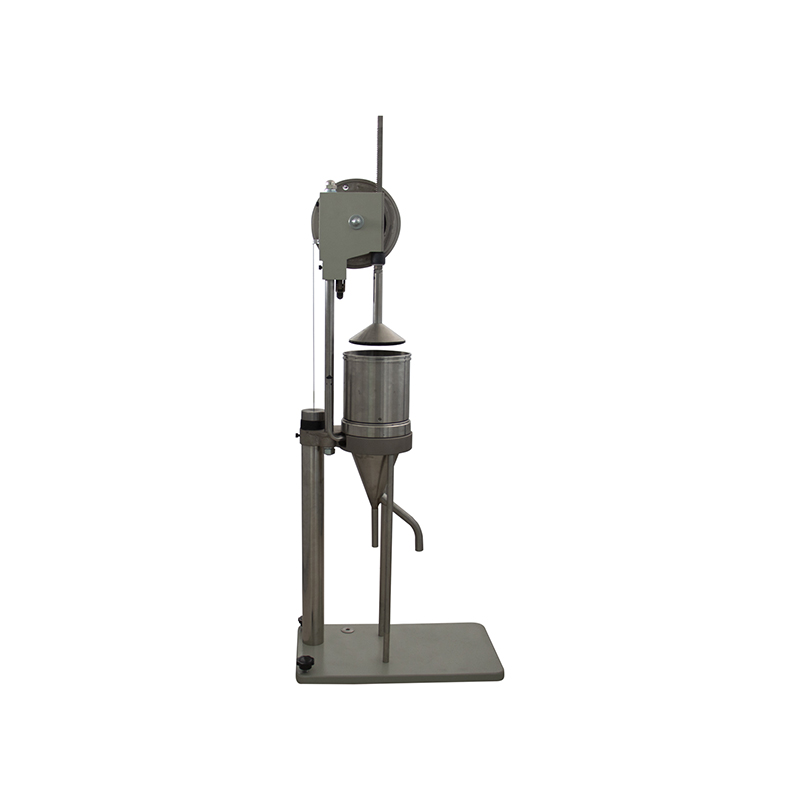
The freeness tester operates on the Schopper-Riegler principle. A diluted pulp suspension of defined consistency is poured into the instrument's chamber under standard temperature conditions (20±0.5°C). The time required for a specific volume of water to drain through the fiber mat is measured using a graduated cylinder and piston mechanism, from which the freeness value (°SR) is calculated. The instrument includes a robust metal body, a high-precision measuring cylinder, a piston for controlling pulp flow, a temperature control device, and a timer. The sealing cone rises at 100±10mm/s, and the drainage time is 149±1s, ensuring standardized test conditions. Manual control makes operation simple and measurement results precise and reliable.
Key Features
Multi-Standard Compliance Complies with QB/T 1054-98, GB/T 3332-1982, and ISO 5267/1 standards, ensuring internationally recognized test data.
Wide Range, High Precision Measuring range of 0-100°SR with a graduation of 1°SR, covering freeness determination for all types of pulp suspensions.
Precision Structural Design Sealing cone rising speed of 100±10mm/s, drainage time of 149±1s, precision-matched cylinder and piston ensure measurement repeatability.
Premium Materials for Durability Silicone sealing ring offers excellent sealing performance and long service life; stainless steel support rods are corrosion-resistant and aesthetically pleasing.
User-Friendly Operation Spring-loaded disc locking mechanism for easier locking; manual control with an intuitive interface allows users to complete measurements effortlessly.
Temperature Control and Timing Equipped with a temperature control device and precise timer to ensure constant temperature and accurate time during measurement, enhancing data reliability.
Complete Standard Accessories Includes 2 measuring cylinders, 1 copper wire mesh, 1 sealing ring, and 2 special wrenches for daily use and maintenance.
Broad Application Range Suitable for pulp and paper production, pulp R&D, and wastepaper recycling to evaluate fiber dispersion and beating effects and optimize processes.
Main Technical Specifications
Parameter | Specification |
Measuring Range | 0 – 100 °SR |
Graduation | 1 °SR |
Distilled Water Temperature | 20 ± 0.5 °C |
Distilled Water Volume | 1000 ml |
Drainage Time | 149 ± 1 s |
Sealing Cone Rising Speed | 100 ± 10 mm/s |
Residual Water Volume | 7.5 – 8 ml |
Overall Dimensions (L×W×H) | 460 × 250 × 1090 mm |
Applicable Standards | QB/T 1054-98, GB/T 3332-1982, ISO 5267/1 |
Included Accessories
Accessory | Quantity |
Measuring Cylinder | 2 pcs |
Copper Wire Mesh | 1 pc |
Sealing Ring | 1 pc |
Special Wrench | 2 pcs |
FAQ
1. What types of pulp are suitable for the Freeness Tester?
It is suitable for all types of pulp suspensions with a freeness not exceeding 100°SR, including chemical pulp, mechanical pulp, chemimechanical pulp, and recycled pulp, providing a comprehensive evaluation of fiber drainage properties.
2. How is the instrument correctly operated?
First, prepare a certain mass of bone-dry pulp sample, place it in the preparation cylinder, add distilled water, and stir evenly. Pour the sample into the chamber, set the measuring cylinder and receiving cylinder. Start the measurement at room temperature 20±1°C, record the sample temperature, cylinder graduation, overflow drainage time, and residual volume, then calculate the freeness according to the standard method.
3. What is the significance of the drainage time of 149±1s and residual water volume of 7.5-8ml?
These are standardized technical indicators: the drainage time of 149±1s is the time range for cylinder drainage under standard conditions, and the residual water volume of 7.5-8ml reflects the instrument's precision and repeatability, ensuring comparability of test results between different laboratories.
4. Why is the sealing ring made of silicone?
Silicone offers excellent temperature resistance, chemical stability, and elasticity, providing good sealing performance and long service life. It ensures the instrument maintains good sealing over long-term use, preventing water leakage that could affect measurement accuracy.
5. How often should the copper wire mesh and sealing ring be replaced?
The copper wire mesh and sealing ring are consumable accessories. Replacement frequency depends on usage intensity and maintenance. It is recommended to inspect regularly; if the mesh is damaged or the sealing ring shows aging or deformation, contact our company to purchase original replacement parts promptly.
6. Does the instrument require regular calibration?
Periodic verification using standard pulp samples is recommended to confirm measurement accuracy. If deviations beyond the allowable range are detected, contact our after-sales service for professional calibration and technical support.
After-Sales Service
Established in 2007 and with nearly two decades of experience, Shandong Annimet Instrument Co., Ltd. is a professional manufacturer integrating R&D, production, and sales of laboratory testing and sample preparation equipment. Quality is our foundation. We are your bridge from concept to reality. We deliver more than just instruments — we deliver confidence. This Freeness Tester comes with a 12-month warranty and lifetime technical support. Our professional team offers 24/7 service response, free installation guidance, operation training, and freeness testing method consultation. For any inquiries, please contact our customer service team; we are dedicated to providing comprehensive pre-sales, in-sales, and after-sales support. Hotline: 400-9933-057, Email: anmt_test@126.com.
Freeness is a critical parameter reflecting the drainage properties of pulp and the degree of beating. The beating process causes fibers to swell, fibrillate, and change morphology and specific surface area, thereby affecting paper strength, bulk, and absorbency. The Schopper-Riegler method determines freeness (°SR) by measuring the drainage rate of a diluted pulp suspension and is the most widely used international standard method. The freeness tester accurately evaluates beating effects, guides process optimization, and enables economical use of raw materials. In pulp R&D, it compares the effects of different beating methods and additives; in wastepaper recycling, it assesses the quality of recycled pulp. As such, the freeness tester is an indispensable basic instrument in quality control, scientific research, and educational experiments in the pulp and paper industry.
 RELATED

Shandong Annimet Instruments Co., Ltd., established in 2007, is a professional manufacturer integrating R&D, production, and sales of laboratory testing instruments and sample preparation equipment. With nearly two decades of industry experience, we are committed to delivering reliable quality testing solutions to clients worldwide.
Contact: +86 400-9933-057
Company Address: Factory Building 105, No. 155, Xinmao Qilu Science and Technology City, No. 299 Zidong Avenue, Tianqiao District, Jinan City, Shandong Province
E-mail: jiang@annimet.com
Fax: +86 0531-88092218
Copyright © 2026 Shandong Annimet Instruments Co., Ltd. All rights reserved
SitemapThis website uses cookies to ensure you get the best experience on our website.

 Español
 Pусский
 Français
 العربية



 Phone
Phone