
 Español
 Pусский
 Français
 العربية


dip coater
A dip coater is a laboratory or industrial device used to apply thin, uniform coatings onto the surface of a substrate by immersing it into a liquid coating solution and then withdrawing it at a controlled speed. This simple yet highly effective process is widely used in materials science, chemistry, electronics, optics, and biomedical research. By carefully controlling parameters such as immersion time, withdrawal speed, solution viscosity, and drying conditions, users can produce coatings with precise thickness, smoothness, and composition.The basic working principle of a dip coater is straightforward. First, the substrate is fixed onto a holder or clamp attached to a motorized vertical stage. The stage lowers the sample into a coating solution contained in a vessel. After a set immersion time, the sample is lifted out at a constant and programmable speed. As the substrate emerges from the liquid, a thin layer of solution remains on its surface. Solvent evaporation and liquid drainage then form a solid coating. The final film thickness depends strongly on the withdrawal speed and the physical properties of the coating solution.Dip coating is valued for its simplicity, repeatability, and ability to coat complex shapes as well as flat surfaces. Compared with some other coating methods, it can provide excellent control over film thickness and uniformity while requiring relatively low equipment complexity. It is especially useful for preparing sol-gel films, polymer layers, protective coatings, functional nanomaterial films, and dielectric or conductive surfaces. In research settings, dip coating is often used to fabricate samples for optical testing, surface modification, corrosion protection, or sensor development.Modern dip coating systems typically include adjustable speed control, programmable immersion and withdrawal sequences, and stable mechanical motion to ensure reproducibility. Some models also offer multi-step coating programs, environmental control, and compatibility with different sample sizes and solution types. These features allow users to optimize the coating process for a wide range of materials and applications.Proper operation of a dip coater requires attention to cleanliness, solution stability, and environmental conditions. Dust, bubbles, or contamination can affect film quality and cause defects such as streaks, pinholes, or uneven thickness. The viscosity and concentration of the coating solution must also be carefully prepared, since these factors influence how much material remains on the substrate after withdrawal. In addition, drying and post-treatment steps such as heating or curing are often necessary to improve film adhesion and performance.Overall, a dip coater is an essential tool for producing thin films with high uniformity and good reproducibility. Its versatility makes it suitable for both academic research and industrial coating processes. By combining precise motion control with a wide range of coating materials, it provides an efficient and reliable method for surface engineering and thin-film fabrication.
Products
Category:
-
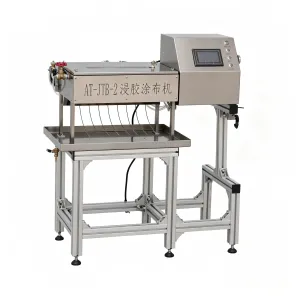
Dip Coating Machine
Category: Coating & Film ApplicatorsBrowse number: 334Number:Release time: 2026-06-04 14:56:24The Dip Coating Machine is a laboratory benchtop device designed for impregnation and double-sided coating of flat substrates such as paper, carbon paper, and nonwoven fabrics. It employs a slot-type dip coating method with both automatic and manual coating modes, a coating width of 300 mm, and an adjustable speed range of 0.1-10 m/min. Pneumatic roller pressure is digitally adjustable, with a maximum pressure of 20 kN/cm. Compact in size and highly controllable, it is an ideal tool for process parameter research in research institutes, enterprises, and universities.
News
Category:
No search results found!
Case
Category:
No search results found!
Video
Category:
No search results found!
Download
Category:
No search results found!
Job
Category:
No search results found!
Featured Products
-
NEWS
Dip Coating Machine
Learn more



 Phone
Phone