
 Español
 Pусский
 Français
 العربية


laboratory ash furnace
A laboratory ash furnace is a specialized high-temperature heating device designed for determining the ash content of various materials by burning off organic matter under controlled conditions. It is commonly used in laboratories involved in food analysis, environmental testing, pharmaceutical research, material science, and quality control. The furnace provides a reliable and repeatable method for samples that must be reduced to inorganic residue for further examination.The basic function of a laboratory ash furnace is to expose a sample to very high temperatures, usually ranging from 500°C to 1200°C, depending on the application and instrument design. At these temperatures, all combustible components are oxidized and removed, leaving behind ash or mineral residue. This process is essential for measuring the inorganic fraction of a sample, identifying mineral content, and preparing materials for subsequent chemical analysis. Because the heating process must be stable and uniform, ash furnaces are designed with advanced insulation and precise temperature control systems.Most laboratory ash furnaces feature a chamber made from heat-resistant ceramic or refractory materials that can withstand repeated thermal cycling. The outer casing is typically constructed from durable metal with a protective coating to resist corrosion and heat damage. Heating elements are usually placed around the chamber to ensure even heat distribution. A digital control panel allows users to set and monitor temperature, time, and sometimes ramp rates or holding cycles. Some models include programmable controllers for automated operation, which improves efficiency and reduces human error.Safety is an important aspect of laboratory ash furnace design. Since the device operates at extreme temperatures, it often includes over-temperature protection, insulated doors, cooling systems, and warning indicators. The door is usually built with a secure sealing structure to minimize heat loss and protect the operator from accidental contact with hot surfaces. In some cases, ventilation or exhaust connections are included to remove fumes generated during ashing. These features help maintain a safe and clean working environment.Laboratory ash furnaces are valued for their accuracy, consistency, and ease of use. They can handle a wide range of sample types, including food products, soil, coal, plastics, rubber, and biological materials. In food testing, the ash content can indicate mineral levels and product purity. In environmental analysis, ash furnaces help determine the inorganic composition of soil, sludge, or waste. In industrial laboratories, they are often used for routine quality inspection and material verification.In addition to ash determination, these furnaces may also be used for heat treatment, sample preconditioning, and thermal decomposition experiments. Their versatility makes them an important tool in many scientific and industrial settings. With proper maintenance and operation, a laboratory ash furnace can provide long-term performance, high precision, and dependable results.Overall, a laboratory ash furnace is an essential instrument for thermal analysis and sample preparation. Its ability to deliver consistent high-temperature conditions makes it indispensable for laboratories that require accurate measurement of ash and mineral content.
Products
Category:
-
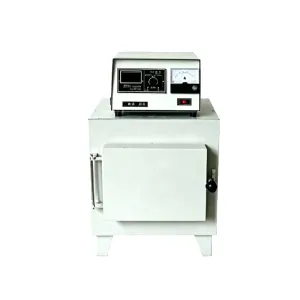
Ash Furnace
Category: Paper Testing InstrumentsBrowse number: 199Number:Release time: 2026-08-04 15:02:53The Ash Furnace is a high-temperature heating device widely used in various laboratories for multiple purposes including combustion, degassing, drying, sterilization, stabilization, sample ashing, and testing. The equipment has a rated power of 2.5 KW, an operating temperature range from ambient to 1000°C, a chamber size of 300×200×120 mm, a capacity of 7.2 liters, and a heat-up time of only 10-20 minutes. The furnace shell is made of high-quality steel plate by edge folding and welding, with a surface finish using imported two-color epoxy powder electrostatic spraying process, providing corrosion resistance and an attractive, durable appearance. The working chamber features a furnace hearth made of refractory material with heating elements positioned inside, and the space between the hearth and shell is built with high-quality insulation material for excellent thermal performance. The furnace body and intelligent controller are integrated into one unit, with a brand-new digital instrument for intelligent temperature control. Temperature uniformity is good, heating speed is fast, energy is effectively saved, and the service life of heating elements is significantly extended. The equipment has multiple protection functions for enhanced safety and reliability. It is widely used for sample preparation and analytical testing in industries including pulp and paper, chemical, pharmaceutical, environmental protection, and research institutions.
News
Category:
No search results found!
Case
Category:
No search results found!
Video
Category:
No search results found!
Download
Category:
No search results found!
Job
Category:
No search results found!
Featured Products
No search results found!



 Phone
Phone