
 Español
 Pусский
 Français
 العربية


laboratory hot press
A laboratory hot press is a compact, high-precision machine designed to apply controlled heat and pressure to materials during testing, sample preparation, and small-scale production. It is widely used in research laboratories, universities, and quality control environments where accurate processing conditions are essential. The equipment is especially valuable for studying the behavior of polymers, composites, films, laminated materials, rubber, and other advanced substances under thermal and mechanical stress.The basic structure of a laboratory hot press typically includes two heated plates, a hydraulic or mechanical pressing system, a temperature control unit, and an operation interface. The heated platens are engineered to maintain uniform temperature distribution across the pressing surface, ensuring that samples are processed consistently. Temperature can usually be adjusted precisely according to specific experimental requirements, allowing users to simulate different manufacturing or curing conditions. Pressure is also carefully controlled so that the material is compressed evenly, which is critical for obtaining reliable and repeatable results.One of the main advantages of a laboratory hot press is its versatility. It can be used for molding, bonding, curing, laminating, sintering, and sample flattening. In polymer research, for example, it is often used to prepare test specimens with uniform thickness. In composite material development, it helps consolidate layers and remove trapped air, improving the internal structure of the finished sample. In adhesive studies, it provides the heat and force needed to evaluate bonding strength and thermal stability. Because of this wide range of applications, the hot press has become an important tool in many experimental workflows.Another important feature is its ability to produce highly reproducible results. In laboratory environments, consistency is essential for comparing materials and validating processes. A well-designed hot press allows users to set specific temperature, pressure, and pressing time parameters, reducing variability between samples. Many models also include programmable controls, digital displays, and safety systems such as over-temperature protection, emergency stop buttons, and insulated surfaces to improve user safety and operational reliability.Laboratory hot presses are available in different sizes and configurations to suit various sample dimensions and research needs. Some models are designed for small specimens and low-volume testing, while others can handle larger sheets or thicker materials. Depending on the application, the press may include cooling functions, vacuum capabilities, or interchangeable platens. These additional features make it possible to adapt the machine to a broader range of material processing tasks.In modern research and development, the laboratory hot press plays a key role in material innovation. It supports the creation of new products, the evaluation of manufacturing conditions, and the improvement of material performance. By combining heat, pressure, and precision control, it provides a practical and efficient solution for laboratory-scale processing. Its reliability, flexibility, and accuracy make it an indispensable instrument for scientists and engineers working with advanced materials.
Products
Category:
-
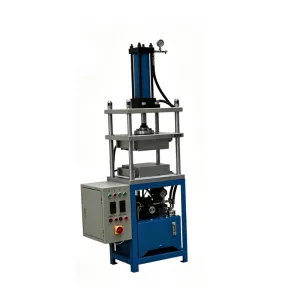
Heated Platen Press
Category: Pulp Preparation & Sheet Forming EquipmentBrowse number: 353Number:Release time: 2026-07-08 09:43:15The Heated Platen Press is a hydraulic hot-pressing device specifically designed for pulp and paper laboratories. As a dedicated companion to the AT-CP series sheet formers, it performs hot pressing, pulp molding, and wood-based panel hot pressing on specimens up to 320×260 mm. The machine employs a hydraulic drive with a specialized cylinder and high-pressure retention components that maintain constant pressure for over 4 hours after the pump stops, ensuring short pump runtime, long working duration, and ultra-quiet operation. It features 3000 W heating power with PID intelligent temperature control (±3°C), adjustable working pressure from 0 to 5 MPa, a φ100 mm piston, a platen area of 320×300 mm, and a stroke of 200 mm. Constructed from stainless steel for corrosion resistance and lightweight durability, it satisfies QB/T 3703-1999 standard pressing requirements while also enabling hot calendering experiments. The unit comes complete with felt cloth, plain cotton cloth, and other accessories, making it an ideal companion for standard handsheet preparation and thermoforming research in the laboratory.
News
Category:
No search results found!
Case
Category:
No search results found!
Video
Category:
No search results found!
Download
Category:
No search results found!
Job
Category:
No search results found!
Featured Products
No search results found!



 Phone
Phone