
 Español
 Pусский
 Français
 العربية


pulp cooking digester
A pulp cooking digester is a key piece of equipment used in the pulping process to convert raw fibrous materials into a form suitable for paper production and other industrial uses. It works by applying heat, pressure, and chemical treatment to break down the lignin that binds plant fibers together, while preserving the cellulose fibers needed for further processing. The digester plays a central role in determining the quality, consistency, and efficiency of pulp production.In a typical operation, wood chips or other fibrous raw materials are fed into the digester along with cooking chemicals and steam. The cooking process takes place inside a sealed pressure vessel, where carefully controlled temperature and pressure conditions allow the chemicals to penetrate the chips and soften the material. As the lignin dissolves, the fibers separate from one another and form a pulp mass. Depending on the process used, the digester may operate in batch mode or continuous mode. Batch digesters process one charge at a time, while continuous digesters allow a steady flow of material through the system, improving productivity and process control.The design of a pulp cooking digester must meet strict requirements for durability, safety, and uniform cooking performance. Since the equipment operates under high temperature and pressure, it is generally manufactured from strong steel materials and equipped with reliable sealing, control, and monitoring systems. Internal circulation systems are often used to improve liquor distribution and ensure even cooking throughout the chip column. Good mixing and uniform heat transfer are important because uneven cooking can lead to poor pulp quality, higher chemical consumption, and increased rejects.A modern digester is usually integrated with automatic control systems that monitor temperature, pressure, residence time, and chemical concentration. These systems help operators maintain stable conditions and adjust the process according to the type of raw material being used. Advanced control also supports better energy efficiency and lower environmental impact by reducing chemical waste and improving pulp yield. In many plants, the digester is connected to washing, screening, and bleaching stages, making it an important link in the overall production line.The performance of the pulp cooking digester has a direct effect on pulp strength, brightness potential, and cleanliness. If the cooking is too mild, the fibers may remain insufficiently separated; if it is too severe, the fibers may be damaged and yield may decrease. For this reason, precise process control is essential. Operators must balance cooking intensity with fiber preservation to produce pulp that meets quality standards.In addition to efficiency, safety is a major concern. Because the digester handles high-pressure chemicals and steam, it requires careful design, regular inspection, and proper maintenance. Pressure relief systems, temperature sensors, and corrosion-resistant materials are commonly used to reduce operational risks.Overall, the pulp cooking digester is an essential industrial machine that transforms raw biomass into usable pulp. Its reliable performance supports efficient fiber processing, product quality, and stable large-scale production in the pulp and paper industry.
Products
Category:
-
Electric Heating Digester
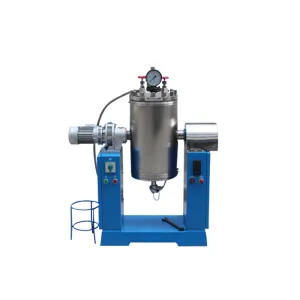
Category: Pulp Preparation & Sheet Forming EquipmentBrowse number: 554Number:Release time: 2026-07-01 16:16:14The Electric Heating Digester is an essential laboratory apparatus for pulp cooking and delignification research. It simulates the working principle of industrial rotary digesters by continuously rotating the vessel to fully mix raw material with cooking liquor, ensuring uniform heat and chemical distribution. This unit is designed for sulfite, kraft, or soda pulping of various plant fibers, as well as for oxygen bleaching and other pressurized reactions up to 8 Kg/cm². The 15 L vessel and all wetted parts are constructed of 304 stainless steel for excellent corrosion resistance. Advanced brushless signal transmission technology replaces traditional slip rings, eliminating risks of sparking, poor contact, and temperature control failure. Equipped with a 4.5 kW electric heating system, intelligent program controller, and high-efficiency insulation, it delivers precise temperature control (±3°C) and superb reproducibility for process development and fiber research.
News
Category:
No search results found!
Case
Category:
No search results found!
Video
Category:
No search results found!
Download
Category:
No search results found!
Job
Category:
No search results found!
Featured Products
-
NEWS
Electric Heating Digester
Learn more



 Phone
Phone